Since I share historical news and genealogy tips with awesome people like you, I want you to know that my content may contain affiliate links for products I use and love. If you take action (i.e. subscribe, make a purchase) after clicking on one of these links, I'll earn some coffee money which I promise to drink while creating more helpful content like this!
Showing posts with label Genealogy Stories. Show all posts

Wednesday, April 1, 2026

A Fool’s Legacy: How Your Ancestors Turned April 1 into a Day of Delightful Deception

 If we were to leaf through the unwritten chapters of your family history—the ones not preserved in census rolls or parish ledgers—we would find moments of laughter tucked between the lines. April Fools’ Day is one of those rare traditions that offers us a glimpse into the lighter side of our ancestors’ lives. Not their migrations or hardships, but their humor. Their playfulness. Their very human delight in a well-timed trick.

Like many customs that have traveled through generations, April Fools’ Day does not have a single, tidy origin story. Instead, it resembles a patchwork quilt—stitched together from different regions, beliefs, and centuries.

Let’s follow those threads.


A Calendar Change… and a Cultural Mix-Up

One of the most widely accepted origin stories brings us to 16th-century France and the ripple effects of the Gregorian Calendar Reform.

Before this reform, many European communities celebrated the New Year in late March, with festivities stretching into April 1. When the calendar shifted New Year’s Day to January 1, not everyone received the memo—nor did everyone feel compelled to obey it.

Those who continued celebrating in early spring became the subject of gentle ridicule. Friends and neighbors would play small tricks on them, calling them “April fools.” In France, this took on a particularly charming form: secretly attaching a paper fish to someone’s back, giving rise to the term poisson d’avril.

As a genealogist, I find this explanation especially compelling because it reflects something we see often in family history: change is rarely adopted all at once. Traditions linger. People hold onto what feels familiar. And sometimes, those who do become the subject of good-natured teasing.


Older Traditions of Turning the World Upside Down

Even so, the instinct to dedicate a day to humor and harmless chaos likely predates the 1500s.

In ancient Rome, there was Hilaria, celebrated in late March. During Hilaria, people donned disguises, mocked authority figures, and reveled in a kind of social role reversal. It was a sanctioned moment of levity—a cultural exhale after winter’s seriousness.

Centuries later, medieval Europe carried a similar spirit in festivals such as the Feast of Fools. Here, the usual order of society was playfully inverted. Clergy might parody religious rituals, commoners might “rule” for a day, and laughter replaced hierarchy.

While these celebrations were not tied specifically to April 1, they reveal a recurring theme across generations: humans have long needed a designated moment to laugh at themselves and one another.


Literary Clues and Lingering Mysteries

One of the earliest possible references to April Fools’ Day appears in The Canterbury Tales by Geoffrey Chaucer, written in the late 14th century. Scholars have debated whether a particular passage refers to April 1 or if it has been misinterpreted over time.

This uncertainty is familiar territory in genealogy. Dates shift. Meanings blur. Interpretations evolve. What matters most is not a single definitive answer, but the pattern that emerges over time.

By the 18th century, however, April Fools’ Day was firmly established in Britain and Scotland. In fact, Scotland extended the celebration into a second day, sometimes called “Taily Day,” which focused on pranks involving—shall we say—the backside. History, as it turns out, is not always dignified.


The Kinds of Jokes Your Ancestors Played

While your ancestors may not have documented their pranks in writing, we can reconstruct the humor of their time through cultural records and oral traditions. And what we find is both charming and familiar.

The Fool’s Errand

Perhaps the most widespread prank across generations:

  • Sending someone to fetch a “left-handed hammer”
  • Asking for “a bucket of steam”
  • Requesting “pigeon’s milk” from a neighbor

These errands were especially common in rural communities and among apprentices. The humor lay not in embarrassment, but in shared understanding—everyone eventually became the fool at least once.


The Invisible Event

In villages across England and Scotland, a person might spread word of an exciting event:

  • A grand performance in the town square
  • A rare spectacle just beyond the fields

Villagers would gather with curiosity… only to discover nothing there. The realization would ripple through the crowd, followed by laughter.

One can almost hear it echoing down a cobblestone street.


Domestic Mischief at Home

Within the household, pranks were smaller, but no less effective:

  • Switching sugar with salt before breakfast
  • Rearranging tools or kitchen items
  • Tying knots in sleeves or apron strings

These were not acts of cruelty, but of familiarity. The kind of humor that only exists where people know each other well.


The French “April Fish”

In France, the tradition of poisson d’avril became a staple among children and adults alike. A paper fish would be quietly attached to someone’s back, and the goal was simple: see how long it took them to notice.

It’s a prank that requires no technology, no expense—just timing and a bit of stealth. The kind of joke that could easily have been played by a great-great-grandparent in a village schoolyard.


What This Tells Us About Our Ancestors

As someone who spends a great deal of time studying records of births, marriages, deaths, and migrations, I can tell you this: humor rarely leaves a paper trail.

And yet, it was always there.

April Fools’ Day offers us a rare window into that hidden dimension of the past. It reminds us that our ancestors were not only defined by the serious milestones we document today. They were also:

  • Playful
  • Social
  • Creative
  • Occasionally a bit mischievous

They participated in traditions that required no wealth, no status, and no formal recognition—only a shared understanding that life, even in its hardships, benefits from a moment of lightness.


A Tradition You Still Carry

When you play a harmless prank or share a joke on April 1, you are not simply participating in a modern custom. You are continuing a tradition that has traveled through centuries of human connection.

Somewhere in your family line, someone likely sent a sibling on a foolish errand, or chuckled as a neighbor fell for a harmless trick. Those moments were not recorded—but they were lived.

And in a way, they still are.

Saturday, January 24, 2026

From Plows to Pixels: The Inventions That Quietly Shaped Our Family Trees

 As a genealogist, I spend an unreasonable amount of time thinking about how ordinary people lived their everyday lives. Not kings and inventors, but farmers, shopkeepers, factory workers, midwives, and children whose names survive only because someone wrote them down. When you look closely at the past, you begin to realize that inventions did more than change technology. They changed families. They influenced where people lived, how long they survived, what records were created, and whether those records still exist for us to find today. The greatest inventions of all time are not just milestones of progress. They are the invisible threads woven through every family tree.


Agriculture: The Invention That Gave Families Roots

Long before written history, agriculture changed the human story in a profound way. When people learned to grow crops and domesticate animals, they stopped wandering and started settling. This single shift created villages, then towns, and eventually cities. From a genealogical perspective, agriculture is what allowed families to put down roots in specific places. Land became something to inherit, pass down, and fight over, which generated records and traditions that still echo today. Stable food supplies supported larger families, and surplus crops freed some people to pursue trades, governance, and religion. Without agriculture, most family histories would be little more than whispers carried on the wind.

Writing: When Memory Became Permanent

Writing transformed human memory from something fragile into something durable. Once words could be recorded, lives could be documented beyond living recollection. Births, marriages, deaths, laws, and transactions could be preserved long after the people involved were gone. For genealogists, writing is the foundation of everything we do. Parish registers, wills, court records, letters, and diaries are all descendants of this one invention. Writing allowed knowledge to accumulate instead of being lost with each generation, and it gave families a way to leave behind proof that they existed. In many ways, writing is the reason your ancestors can still speak to you at all.

The Wheel: Rolling Families Into Motion

The wheel may seem obvious, but its influence runs deep. By making transportation easier and more efficient, the wheel expanded trade, travel, and migration. Goods could move farther, faster, and cheaper, and people followed those routes in search of opportunity. Many genealogical mysteries can be traced back to a road, a cart path, or a trade route made possible by wheeled transport. The wheel also reduced physical labor, increased productivity, and became a building block for countless later inventions. It quietly reshaped economies and family movement patterns long before anyone thought to record why a family suddenly relocated.

The Printing Press: When Information Left the Elite

The invention of the printing press changed who had access to information. Before it, books were rare and expensive, copied by hand and owned by the privileged few. Printing made books affordable and plentiful, encouraging literacy and education across social classes. For family historians, this shift is enormous. Printed church materials, newspapers, almanacs, town histories, and eventually published genealogies all stem from this technology. The printing press also helped standardize spelling and language, making records easier to interpret over time. It gave ordinary people a voice in the historical record and ensured that everyday lives could be documented, not just extraordinary ones.

The Steam Engine: Powering Migration and Industry

The steam engine did not just power machines. It powered massive social change. As the driving force behind the Industrial Revolution, it transformed how people worked and where they lived. Steam-powered factories pulled families from rural areas into cities, while steamships and trains carried millions across continents and oceans. If you have ancestors who suddenly appear in a new country or city in the nineteenth century, steam power likely played a role. Entire family structures shifted as work moved out of the home and into industrial settings. The steam engine accelerated time itself, shrinking distances and reshaping the rhythms of daily life.

Electricity: Turning Night Into Opportunity

Electricity extended human activity beyond daylight and dramatically improved safety and comfort. Homes became brighter, cleaner, and less dependent on open flames, reducing deadly fires that once destroyed lives and records alike. Electricity powered medical equipment, factories, communication tools, and later, technologies that preserved historical documents. From a family perspective, electricity changed work hours, education, and leisure. It allowed people to read at night, study longer, and live more comfortably. It also laid the groundwork for nearly every modern invention that followed, making it one of the most quietly transformative forces in human history.

The Telephone: Shrinking the Distance Between Loved Ones

The telephone collapsed distance in a way no invention before it could. Suddenly, voices could travel instantly across towns, states, and eventually continents. Families no longer had to wait weeks for letters to share news or emergencies. This invention strengthened family connections, reduced isolation, and changed how people coordinated work and care. For genealogists, the telephone marks a shift toward oral history and living memory, where stories could be shared and preserved in real time. It helped maintain family ties even as migration scattered relatives far from their places of origin.

Modern Medicine: Extending Lives and Family Lines

Modern medical advances transformed survival itself. Vaccines, antibiotics, anesthesia, and improved sanitation dramatically reduced deaths from infections, childbirth, and injuries. When you compare family trees before and after these developments, the difference is stark. Earlier generations often lost multiple children and saw adults die young from causes we now prevent or treat. Medical inventions allowed families to grow, stabilize, and plan for the future. They reshaped population patterns and fundamentally altered how long people expected to live. From a genealogical standpoint, modern medicine changed not just individual outcomes but the entire structure of families.

The Computer: Rewriting How We Preserve the Past

The computer revolutionized how information is stored, analyzed, and shared. What began as a tool for complex calculations became the backbone of modern research. For genealogists, computers replaced handwritten charts and file cabinets with searchable databases and digital trees. Records that once required travel and permission to access could now be viewed with a few keystrokes. Computers also improved preservation, allowing fragile documents to be digitized and protected from physical loss. This invention changed how history is studied, saved, and shared, making the past more accessible than ever before.

The Internet: Turning Genealogy Into a Global Conversation

The internet connected people and information into a single, sprawling network. For family historians, it transformed genealogy from a solitary pursuit into a collaborative one. Records from distant archives became available online, DNA testing connected relatives across borders, and family stories could be shared instantly. The internet democratized research, allowing anyone with curiosity and patience to explore their roots. Beyond genealogy, it reshaped communication, education, commerce, and culture itself. It changed not only how we find information, but how we understand our place in a global human story.

Why These Inventions Matter to Family History

When you look at history through family records rather than headlines, the greatest inventions are those that allowed people to settle, survive, move, communicate, and be remembered. Each one left traces in documents, migration patterns, occupations, and family structures. As genealogists, we don’t just trace bloodlines. We trace the influence of human ingenuity across generations, watching how ideas became everyday tools and how those tools quietly shaped the lives we’re trying to understand. In every census entry, marriage record, and faded photograph, these inventions are still there, doing what they have always done: carrying human stories forward through time.

Tuesday, March 19, 2024

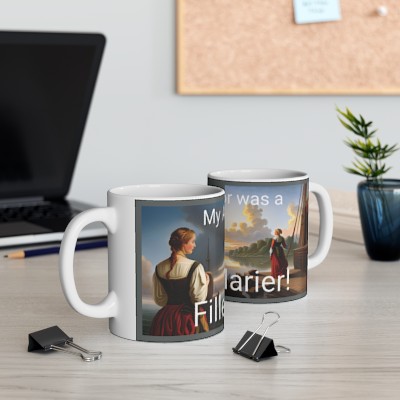
Fascinating Genealogy History: Who were the Filles à Marier? Pioneers of Love and Legacy in New France

    Introduction


    New France, a vast and untamed land of opportunity, held a magnetic allure for European settlers during the 17th century. Among these early pioneers were the Filles à Marier, a group of remarkable women who played a crucial role in the establishment of New France. In this blog post, we'll delve into the intriguing history of the Filles à Marier, exploring who they were, why they came to New France, and the enduring legacy they left behind.

    Fille à Marier

    The Birth of New France


    Before we delve into the stories of the Filles à Marier, it's essential to set the stage by understanding the historical context of New France.

    The Early Days of New France
    In the early 17th century, New France was still in its infancy. French explorers like Jacques Cartier had first set foot on its shores in the mid-16th century, and over time, this vast territory became a prized possession of the French Crown. Stretching from present-day Canada down to Louisiana, New France encompassed a vast expanse of North America, teeming with uncharted wilderness.

    The Need for Population Growth
    As the French established their foothold in this promising land, they realized that the key to success lay in population growth. The colony needed to attract more settlers, particularly women, to ensure its long-term survival and prosperity. The French government and religious authorities recognized that in order to solidify their presence, they needed to encourage family life and permanent settlements.

    Who Were the Filles à Marier?


    The term "Filles à Marier" roughly translates to "marriageable girls" or "marriageable daughters." These were young women, primarily from France, who made the daring decision to leave their homeland and embark on an adventurous journey to New France. But who were these brave souls, and what motivated them to make such a life-altering choice?

    Origins of the Filles à Marier
    The Filles à Marier were primarily recruited from rural areas in France. They came from diverse backgrounds, including farming communities, small towns, and even orphanages. While their social and economic backgrounds varied, they all shared a common aspiration: to seek a better life in the promising but challenging New France.

    Motivations and Aspirations
    What drove these young women to undertake a perilous voyage across the Atlantic Ocean? The motivations of the Filles à Marier were as varied as their backgrounds. Some sought adventure and the chance to escape the constraints of their old lives, while others were driven by the promise of marriage and a secure future.


    Recruitment and the Journey to New France


    The Beginnings of Recruitment
    The recruitment of Filles à Marier was a deliberate and organized effort. It began in the early 17th century, around the year 1634, and continued for several decades. This initiative was part of a broader strategy to encourage population growth in New France and to establish stable, permanent settlements.

    The Role of Religious Orders
    Recruitment was often carried out by religious orders, particularly the Ursulines and the Filles de la Congrégation de Notre-Dame in France. These orders played a pivotal role in identifying and preparing young women for the journey to New France. The Ursulines, for example, selected and educated the Filles à Marier, teaching them essential skills and providing moral guidance.

    Who Funded the Voyage?
    The cost of the voyage to New France was a significant barrier for many prospective Filles à Marier. To address this issue, the French Crown and colonial authorities took measures to alleviate the financial burden.

    The King's Contribution
    In some cases, King Louis XIV himself contributed to the recruitment effort. He provided dowries, which were financial incentives for women to marry in the colony. The dowries were used to fund their voyage, making it a more appealing option for young women seeking marriage prospects.

    Hiring of Sponsors
    Another means of funding the journey was the hiring of sponsors, who were often well-off individuals in New France looking for wives or workers. These sponsors would cover the cost of the Filles à Marier's passage in exchange for their commitment to marry in the colony. In essence, sponsors acted as patrons, facilitating the migration of these women.

    The Perilous Atlantic Crossing
    The journey from France to New France was no small feat. It was a long and arduous undertaking that required both courage and determination. Let's take a closer look at what these women faced as they set sail for the New World.

    The Filles à Marier, like many other European settlers of the time, had to endure the treacherous Atlantic Ocean voyage. Their journey was marked by rough seas, cramped living quarters, and the ever-present threat of storms and disease. Many did not survive the journey, but those who did arrived in New France with newfound resilience.

    Arrival in the New World
    After months at sea, the Filles à Marier finally reached the shores of New France. They disembarked in the bustling port of Quebec, which served as the gateway to the colony. Here, they would begin a new chapter in their lives, one filled with both promise and uncertainty.

    Marriage and Family Life in New France


    For the Filles à Marier, the heart of their adventure lay in the promise of marriage and family life in New France. Let's explore how these women transitioned into their new roles as wives and mothers, contributing to the growth of the colony.

    The Role of Marriage
    The Filles à Marier were expected to marry upon their arrival in New France. Marital unions were not just a matter of personal choice but were strongly encouraged by the colonial authorities. The French Crown provided incentives for men to marry, such as land grants, in order to encourage the formation of stable family units.

    Marriage Arrangements
    Marriage was a central aspect of the Filles à Marier's journey and life in New France. Their marriages were typically arranged, and the process followed a particular sequence.

    The Role of the Notary
    Once the Filles à Marier arrived in New France, they would often consult notaries who played a crucial role in arranging marriages. These notaries maintained records of eligible bachelors and Filles à Marier in the colony, helping to match them based on various criteria, such as age, social background, and personal preferences.

    The Signing of Contracts
    Marriage contracts, known as "contrats de mariage," were drawn up to formalize the arrangements between the bride and groom. These contracts outlined the terms of the marriage, property rights, and other important details. The signing of these contracts was a significant step in the marriage process.

    Family and Community Involvement
    Marriages were not just the union of two individuals but were seen as vital to the development of the colony. As a result, families and communities were often actively involved in the matchmaking process, offering advice and support to ensure the success of the marriages.

    The Filles à Marier's Choices
    Despite the arranged nature of these marriages, the Filles à Marier did have some agency in the process. They could express their preferences and had the right to refuse a marriage proposal if they found it unsuitable. This agency allowed them to have some say in shaping their future in the colony.

    Life as Wives and Mothers
    Once married, the Filles à Marier became integral to the social fabric of New France. They bore children and helped their husbands establish homesteads in this wild and untamed land. Through their dedication and hard work, they played a pivotal role in populating and developing the colony.

    Challenges and Triumphs


    Life in New France was far from easy. The Filles à Marier faced numerous challenges and hardships as they adapted to their new environment. In this chapter, we'll delve into the difficulties they encountered and the triumphs they achieved.

    Surviving the Wilderness
    The Filles à Marier arrived in a land vastly different from the France they knew. They had to adapt to the harsh climate, challenging terrain, and the presence of Indigenous peoples who had inhabited the region for generations. Surviving in this wilderness required resourcefulness and resilience.

    The Hardships of Isolation
    Many of the Filles à Marier lived in remote areas, far from the bustling cities. They often faced isolation, with limited access to the amenities and support systems they had known in France. Yet, they persevered, cultivating the land and building communities.

    Chapter 6: The Enduring Legacy of the Filles à Marier


    The Filles à Marier played a vital role in shaping the future of New France. Their legacy endures in various aspects of Canadian and North American culture, society, and history. Let's explore the lasting impact of these courageous women.

    Cultural and Genetic Legacy
    The Filles à Marier contributed to the rich tapestry of Canadian and North American culture. Their descendants are part of the diverse mosaic of people who call this land home today. Their cultural influence is still felt in traditions, customs, and even surnames that have been passed down through generations.
    Contribution to Population Growth
    The decision of the Filles à Marier to marry and have families in New France had a profound impact on the colony's population growth. This, in turn, contributed to the enduring presence of the French language and culture in North America, particularly in regions such as Quebec.

    Conclusion


    The Filles à Marier, with their adventurous spirit and determination, made a significant mark on the history of New France. These brave women left their homes in search of new opportunities and love, and in doing so, they contributed to the growth and development of a nascent colony in the New World. Their legacy lives on, not only in the descendants who proudly bear their heritage but in the enduring influence of French culture in North America. The Filles à Marier are a testament to the enduring power of human resilience and the pursuit of a better life in the face of adversity. Their stories serve as an inspiration for generations to come, reminding us of the transformative impact of love and determination on history.

    In the vast, untamed wilderness of New France, the Filles à Marier carved out lives filled with courage, hope, and love, leaving an indelible mark on the history of North America. Their journey serves as a testament to the enduring power of the human spirit and the pursuit of a better life in the face of adversity. So, the next time you walk through the charming streets of Quebec or hear the echoes of French language and culture in North America, remember the Filles à Marier and their extraordinary contribution to this captivating chapter of history.

    To Learn More:


    If you're eager to dive deeper into the history of the Filles à Marier and explore their family backgrounds, you'll find a treasure trove of information about the Filles à Marier. This website offers an extensive list of Filles à Marier, along with valuable insights into their family histories. It's a fantastic resource for those keen on unraveling the stories of these remarkable women and their enduring legacy in New France. So, go ahead and explore the rich tapestry of the Filles à Marier's past at greenerpasture.com and embark on a captivating journey through time.

    Friday, March 1, 2024

    The birth of Dauntless Spirit

    Thanks to Micheline Gadbois MacDonald for sending us the story of the "birth" of her book, Dauntless Spirit. Dauntless Spirit is a historical fiction based on the life of Marie Pomponnelle. The book, written in the form of a diary, provides a fascinating glimpse into the lives of the families who came to New France (Canada) from France in the 1600s.

    Micheline is a direct descendant of Marie Pomponnelle.


    Read Micheline's story of how the book came to be (see article below).

    The birth of Dauntless Spirit

    The year 1967 was Canada’s one hundredth birthday and everyone in the country from large corporations to cities, towns and villages as well as individuals were marking the occasion by doing something special. As I was a stay at home mom with a four year old son, there was not much I could do to celebrate that momentous anniversary. So I decided to research the history of our families. That was how “Dauntless Spirit” was conceived. Not having a computer, all my research had to be done by correspondence. It was easy to gather information from Québec as all church records dated back to the first days of the colony.

    I thought that if I started by researching my maternal grandmother I might find the thread leading to the original immigrant. I had one document with which to start; her marriage contract. It has been drawn on June 29 1896 by Notary Appolinaire Archambault in the city of St Henri near Montréal in the province of Québec. In that contract it mentioned that her name was Marie Justina Laura Petit dit Beauchemin and that she was the daughter of the late Fulgence Petit dit Beauchemin, a merchant from the parish of Chambly, and of Philomène Archambault living in St Henri. That was a start.

    In April 1968 I wrote to the Québec Provincial Archives on a chance that they might have some information about the lineage of Fulgence Petit dit Beauchemin. I finally an answer from them on April 24 1968 giving me the name of a genealogist who might be able to help me. I then wrote to Roland Auger and he sent me the information that put me on the track of my ancestor. The list gave me nine generations, from Nicolas Petit dit Laprée, the first to come to Canada, to Fulgence Petit dit Beauchemin, my great grandfather. That was the information needed to retrace my ancestors.


    The ancestor who came to New France in 1649 was Nicolas Petit dit Laprée. He came from Le Gué D’Alleré in Aunis, Charente Maritime, France. I then wrote to the Archives de la Charente Maritime and in return, received a copy of the indenture contract - drawn by Maître Teuleron a notary in France - for Nicolas who was to work for three years for Sieur Boucher in Trois Rivières Canada.

    Grandmother had told us that she was four years old when her father died. With that scant information, Denise and I had visited the church in Chambly but they had no information. I then wrote to the provincial Archives in Montréal and finally hit pay dirt. I found that Fulgence Beauchemin had died on June 16, 1876. Now to find the date of Laura’s birth. Having gotten her death certificate from the parish church in Vaudreuil, and seeing that she had died at the age of sixty-nine years and one month, I realized that she had been born on September 15 1872. One more step gained.

    Several years passed before I got back to my research. In 1980 after our son graduated from high school and entered university, I finally returned to my research and started writing to various parish priests in order to get more information. In March of 1980 I received an answer from the parish of St Mathieu de Beloeil Québec, giving me the birth date of Fulgence as well as dates for his father and grandfather. Later they sent me copies of the death certificate for Fulgence and that of his marriage to Philomène Archambault. Finally I had some concrete information with which to proceed.

    More years passed while other things occupied me and in 1999 I finally got a computer. I went on the internet and was able to research further and get more information.

    My grandmother was a direct descendant of the son of Marie and Nicolas also named Nicolas. Although he was baptized as Nicolas Petit dit Laprée, when he married it was as Nicolas Petit dit Beauchemin. I don’t know why. It may have been so that he was not confused with his father. My research for the family lineage then continued under that name, the name my grandmother carried. My research about the first ancestors was, of course, done under Laprée.

    In 2000 I settled down and decided to finish writing the story of Marie Pomponnelle so as to have the book published by 2006, the three hundred and fiftieth anniversary of her arrival in the country.

    After researching the family on the internet and through the Québec archives, in June 2000 I decided that a visit to Trois Rivières was required. I found myself a lovely, quiet bed and breakfast in the old part of the city and settled down for a week of research at the local archives. My room had a kitchen so I decided to buy my food and eat in. My routine was to go and research in the morning, pick up my lunch and supper at the local farmer’s market and return to my room for lunch. After lunch I walked through the old town, trying to visualize what the colony was like in the middle sixteen hundreds and then go back to my room and write up what I had found. After supper I took another short walk during which I talked to the local people sitting on their verandas.

    It was in the archives that I found and made copies of all the birth, death and Marriage certificates. I also found numerous land deals between Nicolas Petit dit Laprée and several other colonists.

    A clearer picture of life in New France emerged and I realized that my ancestor was not a very good business man. His wife, Marie Pomponnelle seemed to be the mainstay of that family. As I had thought early on to write the book about Marie, I then decided to make it her daily journal.

    Returning home after my week immersed in the sixteen hundreds, I posted a message under Petit dit Laprée on a board and received several answers. Through Robert Rochon, I received a map of Varennes showing where the ancestral house was located as well as a pictures of the house as it stands today, beautifully restored. He later sent me a book published in 1992 celebrating the three hundredth anniversary of the erection of the first parish church in Varennes. That book listed, along with pictures and short histories, all the residents bearing the name of Beauchemin. That book proved to be very helpful in my research.

    There followed more years of research. I had to find out how they grew flax and hemp in order to make clothes, what vegetables they grew in their fields and what animals they hunted in order to survive. I also researched what plants the colonists used for medicinal purposes. I found out how they dealt with the Indian attacks and what they learned from the friendly Algonquian tribe that wintered near Trois Rivières. There was a lot to learn about those early settlers and a lot to learn from the way they lived.

    After a gestation period that lasted nearly forty years, Dauntless Spirit was finally born in 2006, just in time for the three hundred and fiftieth anniversary of Marie’s arrival in New France.

    Micheline Gadbois MacDonald 2011

    Purchase Dauntless Spirit here

    She was kicked out of her grave, which was kicked out of the cemetery...

    Once upon a time, in the state of Massachusetts, there was a place called the "Swift River Valley"...

    "By the later part of the 19th century the valley towns were lively and productive. A branch of the Boston and Albany railroad carried passengers between Athol and Springfield. Known as the "Rabbit Line" because of the number of stops, or short hops it made, the train took three and a half hours to complete the fifty mile trip. Inns and taverns catered to travelers, while industries such as the Swift River Box Company provided work for local residents. Palm-leaf hats, Shaker bonnets, and soapstone footwarmers were made in Dana. Dana and Greenwich were popular with summer visitors, and residents of Prescott relied on farming to provide their incomes. Enfield was originally part of Greenwich; many mills were located there, and it was considered the wealthiest town in the valley.

    Westward expansion and industrialization caused the decline of many rural New England towns, and those in the Swift River Valley did not escape the economic hardships and decrease in population as business and residents were drawn to the opportunities offered elsewhere..."

    In 1900, the Swift River Valley consisted of four towns: Dana (population 790), Enfield (population 1,036), Greenwich (GREEN-witch) (population 491) and Prescott (population 380).
    Friends of Quabbin (www.foquabbin.org/ )

    Anna Amelia Timmerman was born in Poquonock, Connecticut in 1879, the daughter of John Timmerman and Augusta Feige, immigrants from Germany. As a teenager/ young adult, Anna moved to Enfield with her family. There she met her future husband, Rufus Seymour Chaffee. They married in Worcester in June of 1907 and made their home in Enfield. The following April, a son was born to the Chaffee couple. They named him Leslie Seymour.

    While this all may sound like a very ordinary story, it is not. While Enfield, Massachusetts might sound like an ordinary town, it is not. For alongside the town of Enfield flowed the Swift River and that river would, in due time, forever alter the little town of Enfield.

    Life, for Mrs. Chaffee, was not going very well. Around 4 months after the birth of her son, Anna became ill with "phthisis pulmonalis" (pulmonary tuberculosis). Six months later, she died, leaving behind her husband and 9 month old son. Anna was 29 years old. Two days after her death, a funeral was held and Anna was buried in Woodlawn Cemetery, Enfield, Massachusetts.

    Shortly after the death of his wife, Rufus Chaffee headed to Boston, perhaps to find work. It is possible that his son, Leslie, joined him there eventually. It is also possible that Leslie was raised by his paternal grandparents in Enfield. Unfortunately, Leslie's life was also cut short. He died on August 28, 1919 at the home of his grandparents in Enfield. The 11-year-old boy was buried beside his mother in Woodlawn cemetery. Rufus Chaffee returned to the Boston area. His parents remained in Enfield.

    "1919 - A Joint Board of the newly created Metropolitan District Commission (MDC) and Department of Public Health is created. Initial studies of additional water supplies [for Boston] include diversion of the Millers, Swift and Ware Rivers at a proposed cost of $65 Million."

    "...Dana, Enfield, Prescott and Greenwich were dealt a final blow when rumors implying the towns would be flooded began to circulate. Property values decreased, and the Great Depression added its financial strain to the problems facing these small communities."

    In 1920, the Swift River Valley consisted of four towns: Dana (population 599), Enfield (population 790), Greenwich (population 399) and Prescott (population 236).
    Boston's population - 748,000.

    "1922 - Joint report of the MDC and the Department of Public Health is filed. It recommends taking water from the Ware River and creating a massive reservoir in the Swift River Valley."
    Friends of Quabbin (www.foquabbin.org/ )

    Boston was growing. It is ironic to think that the drinking water needed by Rufus Chaffee in Boston would be the downfall of his birthplace and current residence of his parents. Even though they were 75 miles away, Enfield, Dana, Greenwich and Prescott were about to pay the price for the growth of eastern Massachusetts.

    In 1927, the state legistlature passed the Swift River Act. This gave the state the money to build a reservoir in the Swift River Valley. The valley would now have to be cleared of all buildings, vegetation and people (dead or alive). The residents were basically given no options. Source: Pamphlet - Quabbin Park and Reservoir, DCR Massachusetts

    In 1930, the Swift River Valley consisted of four towns: Dana (population 594), Enfield (population 497), Greenwich (population 238) and Prescott (population 48).

    In 1930, the 497 residents of Enfield included Rufus Seymour Chaffee's parents, Norman Seymour Chaffee and Anna Jane Lanphere. They were in their 80s and Enfield had been their home for over 60 years.

    "1932 - Metropolitan District Water Supply Commission votes to call the reservoir Quabbin, a Nipmuck Indian word for the place or the meeting of many waters.

    1933 - ... Quabbin Park Cemetery is dedicated...

    1935 - (6/ 1) Last run of the Athol and Enfield "Rabbit Run" in the Swift River Valley.
    - Daniel Shays highway (Route 202) opens.
    - Last active factory in the Swift River Valley closes. "

    In 1935, the Swift River Valley consisted of four towns: Dana (population 387), Enfield (population 495), Greenwich (population 219) and Prescott (population 18). Friends of Quabbin (www.foquabbin.org/ )

    "Homes and factories were puchased from the townspeople, then razed or moved. Large tracts of land were puchased including 25,000 acres for the reservoir alone. The land which was to be flooded was clearcut and burned. The state removed 7,613 bodies from the valley's 34 cemeteries and the majority (6,601) were reubried at Quabbin Park Cemetery. On April 28, 1938, Dana, Enfield, Prescott and Greenwich officially ceased to exist and the 2,500 people who once populated the towns and villages no longer had a place to call home." Source: Pamphlet - Quabbin Park and Reservoir, DCR Massachusetts

    Norman Seymour Chaffee died in 1935 at the age of 86. His wife died two years before him. Neither lived long enough to witness the flooding of their beloved town of Enfield; however, the uncertainty of their future must have weighed heavily on them in their final years.

    Construction began in 1936.

    "1938 - (3/ 28) Remaining unbought land in the Swift River Valley is taken by eminent domain. - (4/ 28) Enfield, Greenwich, Dana and Prescott are disincorporated. Farewell Ball held in the Enfield Town Hall." Friends of Quabbin (www.foquabbin.org/ )

    In 1938, the Swift River Valley consisted of four towns: Dana (population 0), Enfield (population 0), Greenwich (population 0) and Prescott (population 0).

    "Filling commenced on August 14, 1939 and was completed in 1946 when water first flowed over the spillway. The Quabbin Reservoir was filled with water from the Swift River and flood skimming from the Ware River during eight months of the year. At the time, the 412 billion gallon reservoir was the largest man-made reservoir in the world which was devoted solely to water supply." Source: Massachusetts Water Resources Authority website - www.mwra.state.ma.us/

    Rufus Seymour Chaffee died in 1941, before ever getting a chance to sip a cold glassful of Quabbin water. Did he witness the demise of his hometown and the beginnings of what is now the Quabbin Reservoir? It is difficult to imagine how he must have felt to lose his wife, son, parents, hometown, and to bury his wife and son twice.

    When I look out at the Quabbin through the eyes of a curious tourist, all I can see is its beauty. Examining its history, I picture a steady flowing river born of the tears of 2,500 people, slowly engulfing their lives, drowning their dreams and submerging their memories - just about enough water to fill a reservoir.

    1689 - Lachine Massacre

    During the night of the 5th of August, 1689, amid a storm of rain and hail, 1400 Iroquois crossed lake St. Louis and silently disembarked near Lachine, and before daybreak, parties of them had surrounded every considerable dwelling in the vicinity. The inmates were buried in profound slumber, soon to become, for many of them, the " Dreamless sleep that knows no waking." At a given signal, doors and windows were driven in and the victims dragged from their beds — men, women and children, struggling in the hands of their butchers. Such houses as could not be readily forced, were fired ; and as the terrified inmates were driven forth by smoke and flame, they met certain death from beings who knew no mercy.
    Two hundred persons were burned alive, and numbers died under prolonged tortures. Houses and outbuildings were reduced to ashes, and crops were totally destroyed. After having ravaged the whole vicinity, they crossed the river, and on the opposite side continued their fearful work. Those who escaped the destruction were paralyzed by the brain-blow. The governor who was in Montreal, seemed to lose self-command altogether. - It had been long evident that he exercised no proper influence ; but the small use he made of the means at his disposal when this crisis arrived, was most surprising. His incapacity on every occasion where promptitude and energy were required, gave little room for doubt that had he not been soon recalled by royal order, the colonists themselves would have set him aside. The last season of his unfortunate administration was called the year of the massacre. In not one particular, had he justified his reputation for bravery and efficiency.

    History of the Eastern Townships, Province of Quebec, Dominion of Canada, Civil and Descriptive in Three Parts – Catherine Matilda Day, J. Lovell, 1869 - Eastern Townships (Québec)

    The Deerfield Massacre - Capture of Himself, Wife and Others - Their Winter March to Canada

    "Benjamin Burt was the twelfth child of David and Mary Holton Burt; he was born at Northampton, Mass., on November 17, 1680. During his childhood the borderland along the Connecticut valley was the theatre of Indian forays and massacres. When eight years old his brother David, a soldier on duty at Schenectady, N. Y., was taken prisoner on the dreadful night of February 9, 1690, when that town was destroyed by the French and Indians, and was never again heard of, as stated in the previous sketch. Having added to his occupation as farmer the additional craft of black smith, Benjamin moved in 1701 to Deerfield, the outpost settlement of Massachusetts. Here, on October 19, 1702, he married Sarah, daughter of Daniel Belden, who had greatly suffered in his family by Indian outrages.

    Deerfield is beautifully situated near the confluence of the valleys of the Deerfield and Connecticut rivers, and contains a large area of that alluvial soil so attractive to early settlers. It is surrounded by a picturesque region of hills and vales, but its location at the union of river valleys from the north, west and east made it easily accessible to hostile approach from those directions. These conditions and its extreme frontier position had attracted to it as a strategic point the savage enemy in the " King Philip" and the French wars. In 1703, its exposed site led to its fortification by a palisade of tree trunks entirely surrounding it, and to its protection by a garrison.

    In January, 1704, an expedition was formed at Montreal, Canada, under the command of Major Hertel de Rouville, for a foray upon Deerfield. The party consisted of two hundred Frenchmen and one hundred and forty-two Indians, and Major de Rouville had for subaltern officers his two brothers. The foray upon Schenectady fourteen years earlier was almost exactly repeated. The invaders made a forced march through the wilderness and suffered terribly from the intense cold. When they reached the vicinity of their destination there were four feet of snow on the ground and the crust on it was sufficiently strong to bear the weight of men, while the drifts had made easy inclined paths to the top of the palisade that encircled the devoted village. The sole sentinel on duty, depending upon the mid-winter rigor as a sufficient defense, had been unfaithful to his trust and sought shelter from the icy blasts, when just before daybreak on February 29, the assault was ordered upon the undefended and unsuspicious town. A general attack was simultaneously made by the invaders scattered throughout the settlement. The unfortunate inhabitants, wakened from slumber and pleasant dreams by the frightful warwhoops of the savages, .were massacred or disabled as they ran afrighted from their assaulted homes, to which incendiary torches were applied to illumine the awful scene.

    As in other such raids the Frenchmen failed to restrain their barbarous allies, and the imagination can but faintly conceive the terror and frenzy that overwhelmed the homely people of that quiet hamlet when they realized in the mingling light of flame and dawn that they were in the hands of their ruthless foe. What a commentary upon the utter barbarism of war was the misery of these ill-fated people, caused by the quarrels of two monarchs three thousand miles distant.

    Very few of the unfortunate people escaped to the adjacent forest, and such of the others as were not slaughtered at sight were gathered in the open space near the little church ; and among these were Benjamin Burt and his wife, who had escaped death only to witness the destruction of their home. Less than eight years earlier, in a sudden raid upon her father's house, Mrs. Burt had seen her mother, two brothers and infant sister killed by the Indians, and another brother desperately wounded, while she escaped by hiding in the attic, and her father, a brother and a sister were taken captive to Canada, whence they did not return for two years- Her father's fate was the best that could now befall her, as she and the other wretched survivors clung together in scanty attire, alternately chilled by the winter's cold or scorched by the heat of their blazing homes, as they tearfully counted the slain by their absence, mingled their lamentations over the loss of loved ones, and saw all their treasure turning to ashes, while a dreadful uncertainty obscured their own fate. In their midst their revered pastor, the Rev. John Williams, addressed prayers for divine assistance and support, which were interrupted by the orders to march, as the forlorn captives were driven from the village, while its conflagration still continued. The number of prisoners was one hundred and twelve, and among them were Mrs. Burt's step-mother, Mrs. Hepzibah Belden, and Mr. Burt's cousin, Nathaniel Brooks, with his wife and two children.

    The prisoners were first taken to the "west mountain" north of the late village, and on the same afternoon started on their terrible journey to Canada. Their route was up the valley of the Connecticut, and the deep snows and rugged character of the wilderness made their progress as slow as it was painful ; on March 3 they had gone only thirty miles on their way and advance after that date was even slower. The condition and sufferings of these unfortunate creatures cannot be adequately described ; in the few brief, agonizing minutes of the attack they had neither forethought nor time to make the least preparation for such a fearful journey; poorly clad and shod, the rocks, bushes and brambles soon rent their scanty garments and when sodden with the penetrating melted snow their power to resist the icy blasts was almost exhausted. At night when the exertion of motion no longer stimulated their blood they could only save their vital warmth by lying close together in the snow, a feebly palpitating mass of misery. There was the further privation of insufficient food, the Indians always depending for subsistence on their forays upon the hap-hazard wild game that fell in their way. Of course the captives received the minimum share of such poor food as they had and that of a quality repugnant to the weaker ones. The women and children naturally suffered the most from the unintermitting fatigue and deficient food, and when they lagged or were disabled they were immediately slain by the impatient and ruthless savages. The wife* of Pastor Williams was the first victim, having given out early in the march, and was tomahawked in the presence of her afflicted husband and children. The next victim was Mrs. Belden, the step-mother of Mrs. Burt, then nearly sixty years old, and who met the fate that about ten years earlier had overtaken her three daughters at Hatfield, where they were tomahawked by the Indians. Altogether there were thus slain on this sad journey nineteen captives, most of them being pregnant women. Some of these poor creatures, when they felt that their powers of endurance were nearly exhausted, calmly prepared for death by seeking the consolation of prayer with Mr. Williams, who gives in his journal a pathetic account of the resignation and heroism of these brave souls about to part from their tortured, worn-out bodies. Mr. Williams, who gives in his journal a pathetic account of the resignation and heroism of these brave souls about to part from their tortured, worn-out bodies. 'I saw in the naked forest Our scattered remnant cast, A screen of shivering branches Between them and the blast; The snow was falling 'round them, The dying fell as fast.'

    On this direful march none endured more than Mrs. Burt ; when she started upon it she was in the eighth month of her first pregnancy, and despite the solicitous aid of her husband could scarcely have borne the burdens, rigors, privations and horrors of those twenty-five woeful days, had she not been sustained by her youth and extraordinary powers of endurance. The writer has often in fancy depicted to himself this ancestress, subjected in her early wifehood to that direful ordeal ; the days of unmitigated misery in the deep snows of the bleak and trackless wilderness; the piercing cold ; the sore, aching, frost-bitten limbs; the ever gnawing hunger; the slaughter of her step-mother and of the many women burdened like herself; of the long nights haunted by the vague dread of the morrow with all its known and unknowable terrors. Was it with joy or dread that she felt within her the throbs of her unborn child?

    When the party reached Coos in Vermont (near the present site of Newbury on the Connecticut) it was entirely destitute of pro visions and two of the captives died here of sheer starvation. The hunters having succeeded in getting some game, the dreary march was resumed, until on March 25 the party reached Chamble about eighteen miles northeast of Montreal. Here, on April 14, Mrs. Burt was delivered of her first child, a son named Christopher. Subsequently the captives were distributed among the Indians and French and put to various services, the larger portion of them being employed in the convent and Jesuit academy near Montreal, Mr. Burt and his wife being among these. Strong efforts were made to convert them to the Roman Catholic faith and these Mr. Williams subsequently denounced in earnest phrase in his rare and famous book, "The Redeemed Captive Returning to Zion."

    The destruction of Deerfield excited great interest and sympathy throughout New England. Among the recent publications of the Massachusetts Historical Society is the diary of Mr. Samuel Sewall. He writes at Boston on March 6, 1704: " We are extreamly [sic] grieved to hear that Fifty Seven persons were kill'd and Ninety Captivated out of the little Town of Deerfield. The very worthy Minister, Mr. John Williams, and his wife, are among the Captives. How they will be able to travel to Canada in the very deep Snow and terrible Cold since Tuesday Night last when they were Taken; would make a hard Heart bleed to think of. We know not yet the Particulars or manner of the Tragedy."

    Ensign John Sheldon of Deerfield made four expeditions to Canada to redeem his fellow-townsmen, and finally on May 30, 1706, left Quebec with over forty of them, among whom were Mr. Burt, his wife and child. They went down the St. Lawrence and thence 'by sea to Boston, where they arrived on August 2d. On the voyage Mrs. Burt bore her second child, a son who was named "Seaborn," from the place of his birth. Mr. Sewall, writing from Boston on August 22, 1706, to Mr. Williams, still in Canada,says: " As you pray'd earnestly for those that returned last, so you will be glad to hear that they Landed here on the 2d Ins't. I took the widow 'Hirt into my House. It was a great blessing to see Mr. Willard baptise Ebenezer Hinsdale and Seaborn Burt, two little Sons born on the passage. The Captives most of them began their Journey homeward on the 12 Ins't."

    The Colonial government then sent the brigantine Hope to Quebec, which left there October 25 with Mr. Williams and fifty-six others, arriving at Boston on November 21. The remainder of the captives formed attachments in Canada, and being converted by the priests, married into French families and remained there.

    Mr. Burt and his family repaired to Deerfield, overborne by the memory of their own misfortunes and the massacre of so many of their near relatives in the border wars. As an illustration of the afflictions of those who founded our nation, the names of these relatives may be given. On Benjamin Burt's side were: (1), his brother David, captured at Schenectady, February 9, 1690, and never after heard from ; (2), his brother John, killed in a scout in May, 1707 ; (3), his uncle, Joseph Baker, killed October 29, 1675 i (4), his uncle, Thomas Holton, killed March 14, 1676; (5 and 6), his cousins, William and John Brooks, killed October 27, 1675 ; (7)- his uncle, Sergeant Samuel Wright, killed September 2, 1676 ; (8, 9 10), his cousin Nathaniel Brooks's wife, captured at the same time as himself, the wife slain on the march to Canada and the children never after heard from.

    On Sarah Burt's side were (1, 2, 3 and 4), her mother, two brothers, and sister, killed September 16, 1696; (5 and 6), her .cousin, Mary Belden, and child, killed September 19, 1677 ; (7), her cousin, John Smith, killed May 30, 1676; (8), her step mother, captured at the same time as herself and slain on the march to Canada.

    They thus together had eighteen relatives slain, besides many others severely wounded or carried into captivity. Upon their return to Deerfield, the rebuilt village presented no familiar aspects, but revived the horrors of its destruction and the subsequent incidents. Mr. Burt and his wife considered the advisability of seeking a safer abode, and as the latter had kindred settled at Stamford, Ct., on Long Island Sound, they migrated there, and finally located at Norwalk, about seven miles from the former town...

    Early Days in New England: Life and Times of Henry Burt of Springfield and Some of His Descendants. Genealogical and Biographical Mention of James and Richard Burt of Taunton, Mass., and Thomas Burt, M.P., of England

    Henry Martyn Burt, Silas Wright Burt C. W. Bryan Company, printers, 1893 - New England - 617 pages

    A Really Bad Marriage

    Julien La Touche, from La Rochelle, a soldier in the Grandfontaine Company of the Carignan Regiment, earned his living in the region of Trois-Rivieres. Because of his lack of talent as a farmer, he was content to lease lands from Maurice Poulin, Sieur de Lafontaine, and from Charles Jutras dit Lavallee.

    Elisabeth Bertault was pressured by her father to accept the 30-year old Julien LaTouche in marriage. Elisabeth let herself be lead to the foot of the altar of the church of Trois-Rivieres on 12 August 1671. Disaster! Almost immediately poverty settled in at the home. Papa Bertault often had to send food to his daughter or invite her to eat at home. He even stated that he and his wife could accomplish more work with a pickaxe than LaTouche did with two oxen and a plow. Furthermore, LaTouche drank and beat his wife, sometimes drawing blood. 'I wish that you were dead', he often told her.

    What must happen, will happen. The parents believed themselves wounded in their own flesh. They decided to do away with Julien. After an attempt at poisoning, they killed their son-in-law by stabbing him with a pickaxe and dragged him into the river. Of course they were caught. At Quebec, the case was judged criminal and the parents , little people with no defense, paid with their lives: strangulation for the father, hanging for the mother. On 9 June 1672 in the Upper Town of the capital, Elisabeth was compelled to personally attend the barbaric execution of her parents.

    Thomas J. Laforest Our French-Canadian Ancestors : Volume XV, Pages 161-162

    Anita's Silver Baby Cup

    Anita was born in Brooklyn in 1921. Three years later, Lou was born in Chicago. Fast forward 89 years to 2013. How did Lou, who has never heard of Anita, end up with Anita's silver baby cup in Pennsylvania? How did we find it?

    A distant connection does exist between Lou and Anita. Lou's husband and Anita shared a common set of great-grandparents. Think about it. Do you know anyone who is related to you with the closest connection between the two of you being common great-grandparents? Probably not!

    Lou lives in Pennsylvania. Her family lives in California. Living alone at 89 years old is rather challenging, especially when your family is completely across the country. Realizing this, Lou decided it was time to relocate. Packing up a home containing years and years worth of accumulated treasures presented an additional challenge.

    Gail wanted to see Lou before she left (and I wanted to meet her), so we took the 4 1/2 hour drive to Pennsylvania. We spent two wonderful days with her. We shared family stories, and even went to the place where George Washington crossed the Delaware! While chatting with us, Lou mentioned a silver baby cup, thinking it belonged to someone entirely different. We examined the cup and discovered Anita's name. We could not believe our eyes. How did Anita's cup ever end up here?

    Upon further thought, we realized that had we not recently written our family history book, we never would have known Anita's name. Without our book and all the research associated with it, the cup would have been pushed aside and packed into another random box, perhaps on a journey to California, without any of us having any idea as to whom it belonged. Instead, Anita's cup is returning home to Anita! It has been "missing" for around 70 years!

    Anita's mother, Beatrice, died in Brooklyn in 1943. At that time, Anita was around 22 years old. A year before her mother died, Anita enlisted in the Marine Corps, during the height of World War II. Our theory is as follows: Anita's parents were divorced. When Beatrice died, her family came and took control of her possessions. Her children went to live with their father. Beatrice's brother, Charles, was living in Rhode Island with his wife, Anne. Charles took the box containing his niece's silver cup back to Rhode Island. He intended to save the cup and return it to Anita when she came home. That never happened. Six months after the death of his sister, Charles died. It was April of 1944. At this point, the silver baby cup remained in a box in Rhode Island, now the possession of Charles' widow, Anne. If you're not already confused enough, Anne and Charles were not only husband and wife, but also first cousins. That's another story!

    Anne survived many, many years after the passing of her husband, Charles. She died in Greenville, Rhode Island in 1971. We assume the cup remained in her possession all those years. She probably knew of Anita. She might have even met her at one time, but since the passing of Anita's mother, Anita and her siblings had fallen out of touch with their mother's side of the family.

    What happened next? Since Anne and Charles never had children, we believe that Anne's sister, Rosalie, took control of Anne's possessions when she died in 1971. Rosalie lived in Pennsylvania. This is likely how the cup arrived in that state. Less than two years after the cup fell into the hands of Rosalie, she died. It was January of 1973, and the cup now belonged to her only son, Erdman. The cup remained in the possession of Erdman, and his wife, Lou. It is likely that Erdman had no idea who the original owner was, if he even thought about it at all. Erdman passed away in 2009. That leads us to today (2013), our visit to Lou's Pennsylvania home, and the discovery of the tarnished silver baby cup, engraved with Anita's name.

    Fast forward a couple of weeks.

    We are now in Buzzards Bay, Massachusetts, with Anita's brother, Bob, and his wife, Anne. The cup has been cleaned and carefully wrapped. It is heading for Anita.

    Arriving at the nursing home where Anita lives, we couldn't help but notice how beautiful it is compared to other nursing homes we have been to. Our anticipation is growing.

    Anita is sitting in a wheel chair in a nursing home corridor. Beside her, also in a wheel chair, is her best friend, Millie. Anita and Millie have been friends since World War II.

    We approach Anita with cup carefully boxed, and introduce ourselves as her cousins. Anita looks at us with doubt because she has never seen nor heard of us before. We don't bother to try to explain because it is far too complicated.

    As the box is opened and the cup is revealed, Bob points to Anita's name on the cup. At this point, Anita smiles as if her entire childhood came back to her in that very moment. While we will never know what she was thinking, the smile on her face said more than words. We watched as she showed the cup to Millie and the many interested nurses who gathered to hear the story. When Bob tried to put the cup in Anita's bedroom, she refused to let go of it. We wondered how long it was before she let it out of her hands.

    We returned home to our laundry and dishes. This was certainly not an ordinary day. It's not often that we get a chance to bring such joy to someone we have never met.

    About a month later, Anita passed away. We will always remember the day we made her smile. We hope her silver baby cup stays in the hands of her family for many years to come.

    The Car Jack and the Hair Brush

    It was supposed to be a cool autumn New England-type day, but typical of New England weather predictions, it turned out to be quite warm. We were in Connecticut on a mission: Find our ancestor's gravestone and rescue it from the destructive forces of time and nature. Armed with a map and an unfamiliar vehicle (which periodically threatened to trap us in its seat belts), we entered the cemetery, quite pleased that we had found it easily. Now, to find the gravestone. Gail was trying to locate the grave on the cemetery map; however, there were no signs inside the cemetery to indicate our location. I was trying to maneuver the unfamiliar vehicle routinely driven by my husband (and avoided by me). Deciding we had been car-bound long enough, I pulled over into what seemed to be an area large enough to fit the van. "Let's just get out of this van and then we can figure out where we are and find the grave." Once we got out, I immediately spotted the grave we were looking for. It was right next to the van. How convenient?

    Feeling a bit fortunate that we didn't have to wander around the cemetery in the heat, we went about our task. August's grave, in that location since 1904, was slowly being reclaimed by the Earth. It was sinking out of sight and it was going to be lost for all time. Though we never knew him, he is a part of us. We began to dig, at first carefully around the perimeter of the gravestone. It wasn't long before we realized that this was some of the toughest grass we had ever encountered. Out came the big shovel. That seemed to do the trick and work progressed fairly quickly from that point forward. Our next problem: The stone was heavy. We needed leverage to lift it from the hole. Wishing we had brought a crow bar, we thought about the problem and decided the car jack might do the trick. Removing the car jack from the van wasn't easy. The people who designed it really should have made the compartment where it is stored bigger than the jack itself. Once removed, the jack was not as long as we had wished. Somehow, between the jack and the shovel, we were able to get the leverage we needed and together we rolled the stone over up onto the grass.

    At this point, we examined what we originally thought was a pesky rock that had been hindering our excavation efforts. Upon further digging and examination, we determined that it was the original base for August's stone. We cleaned it off and rolled August's stone on top. We filled in the hole left where we dug out the stone, which apparently had slipped off its base over time. Then, we planted mums - some for August and some for his daughter whose grave was nearby. Gail didn't like the looks of August's stone which was all covered with dirt. Water and our hands could do little to rectify the problem. That's when Gail walked over to the van and returned with her hair brush. The hair brush served as a more-than-adequate dirt removal tool.

    Feeling pleased with the results of our efforts, we turned our attention to the fact that we were now dirty and sweaty. Gail returned to the van for a new change of clothes while I found the cemetery's water supply and used it as a make-shift "shower".

    We took pictures of our rewarding "work" and headed on to part two of our adventure - another town, another ancestor...

    As Gail said, "August, you are good for another 100 years."

    Six Inches Under

    There are many mystery graves in the cemetery. We have found several. This is the story of one.

    Last October (coincidentally Halloween), I discovered the grave of whom I thought might just be my g-g-g-g-grandmother who came to the U.S. from Prussia in 1853. The grave stone said "R.S." nothing else. It was located next to a person whom I knew to be her eldest daughter, Johanna. I took a photo. The quest for the truth began.

    When my cousin, Gail, saw this photo, she immediately thought that the stone had tipped over. I never would have guessed that in a million years. Was this the person we thought it might be? Did the stone tip over? What was on the other side?

    So off we went on an two-day journey to the cemetery, armed with shovels, rakes, dirt, mulch, flowers, fertilizer, jugs of water, blocks of wood... Our mission -- lift up this stone and see if there is anything on the back.

    Carefully, we raised the stone (it is smaller than it looks), and discovered that nothing is on the back. HOWEVER, something is on the top -- it says "MOTHER"! Gail was right! This confirms to us that this is Johanna's mother, my g-g-g-g-grandmother and Gail's g-g-grandmother!

    It was a busy day for us. While painting the cemetery with marigolds of various sizes and colors, we discovered what might very well be another stone - buried - six inches under. What other mysteries lie inside the cemetery? We know of several in plain sight, yet undocumented. We also know of one, concealed by time, six inches under.

    A new mystery = a new journey... Stay tuned.

    Cemeteries

    As a child, I used to skateboard on cemetery roads. The local cemetery served as a playground.

    Reaching teenage years, yes, it became a place of romance (or a "makeout" spot, depending upon whether you were the guy or the girl). It might seem a bit strange, but I can remember on several occasions having to relocate due to the arrival of a funeral crowd.

    My uncle's grave was the only one I was familiar with in that particular cemetery, though I later discovered that more family was there. I did occasionally remember to pay my respects.

    Having grown up thinking that cemeteries were fun, I have never felt uneasy in them. I have never thought of there being spirits there or anything besides stones and a great deal of history.

    Looking for my ancestors, I have discovered something new about cemeteries. There is a bit of "life" in them, whether real or perceived.

    Three examples:

    (1) I had the opportunity to visit Oak Glen Cemetery in Ledyard, Cayuga, New York. I was looking for the grave of one of my g-g-g-g-grandfathers. His name was Sherman Smith. I was fortunate that day in that there were many people with me including my husband, son, mother and mother-in-law. They were all good sports about it and agreed to help me locate this grave. We split up and walked through the cemetery row by row. We did not find the grave, yet I had records indicating it was there somewhere. A bit disappointed, and ready to leave, I had a sudden feeling come over me that told me to go back to one particular spot and look there. This was an area that my husband had just finished searching and, knowing him, he was more thorough about searching than I was. Something made me go to that spot. The grave was right there in plain sight. Trying not to read into this, it almost felt like I was supposed to be the one to find it. Very strange.

    (2) I dragged my husband to Pittsfield Cemetery in Pittsfield, Massachusetts. It was Halloween (that was a coincidence). I was looking for the graves of my g-g-g-g-grandparents, Charles and Rosalie Theunert (who changed their name to Smith or Schmidt). The cemetery had no record of such graves, but they also had no record of the grave of their daughter, Augusta, and I had previously located it there. Unfortunately, this cemetery is HUGE. So section by section and row by row my husband and I searched. At one point, I was in a section and was suddenly surrounded by crows. They were making an absolute racket. It was not until my husband called me on my cell phone to ask me what all the noise was and to find out if I was okay, that I began to feel a bit creepy about the situation. I changed course. The day went on and the cemetery was too big for us to handle. On the way out, I asked him to take one last drive around. Out of the corner of my eye, I spotted a stone with "Vogel" on it. That name meant something to me and I told him to stop. It turned out that at that spot were the graves of two of Charles and Rosalie's children - Johanna and Mary Caroline. They were there with their spouses, Henry Vogel and Augustus Frohlich. Beside the Vogel graves was a small stone -- "R.S." I know it's a long shot, but I really feel like this could be the grave of Rosalie Smith/ Schmidt.

    (3) My cousin, Gail, and I went to Saint Mary's Cemetery in Warwick, Rhode Island, looking for my g-g-grandparents, John Baker and Jane Davis, immigrants from Ireland. Records found in the Warwick library indicated that the graves of some of their children were there, listed in a particular section. We got out of the car and walked that section and did not find the graves. We got distracted and started talking and walking around, randomly looking. After a while, Gail (being a voice of reason) told me that the cemetery was too big and we could walk it forever and never find what we were looking for. About to give up, I jokingly raised my hands into the air and pleaded "ancestors, will you help us out?". I turned around, and the Baker family graves were right behind me. I never found John and Jane's graves, but I did find the graves of their children. It was as if I called and they answered.

    Strange and funny things...

    I suppose I could start to wonder about who might have been watching during those moments of cemetery "romance", but I won't go there...

    To those who come after us

    I have wanted to write this for a while, but could not find the words.

    Looking back on this whole experience, searching for ancestors and developing this web site, I realize that it has become an obsession. It has truly grown to the point where it has taken on a life of its own.

    Would I do it again? Absolutely! Here's why: Through the years of working on this, I have met many people. Considering myself to be not much of a people-person, that was not my original intention, nor did it even initially enter into my mind. Meeting people has been an interesting side-effect of this whole process. I have met cousins who have shared some wonderful photos and stories, one even an amazing audio CD containing the voices of several of my great-aunts, all passed on. One of the best photos I received was of my g-g-g-grandfather, George Salisbury, who fought in the Civil War and was at the battle of Gettysburg. People have contributed to the web site and the growing compilation of our family's history in countless ways. Not every encounter has been wonderful, but most have been pleasant and worth my time.

    The most unexpected and most valuable experience I had was with a cousin from Rhode Island. I replied to a message she posted eight years prior on ancestry.com, thinking I had found her family and that she was a part of my family. Through many conversations and countless hours of research, we discovered that she is related to me on both my father's and mother's sides, in fact, distantly related to all four of my grandparents! This would have been enough to make it worthwhile; but, the relationship has developed to the point where I now consider her to be not only my cousin, but my dearest friend. The adventure is fascinating, heart-warming, and truly wonderful in many ways far beyond my ability to find the words to bring clarity when you read this.

    While I don't consider myself old enough to be wise, my message to those who come after us is this: Take the time to find your family. Their blood is in your veins. When you meet them, you will feel it. Learn about them, "meet" them if you can. Hear their stories, current and of centuries passed. In doing so, you will discover much about yourself. I can't promise you this, but it's even possible that you might find someone so special that his/ her friendship becomes a life-altering experience in an amazingly positive, fascinating, wonderful way. Nothing could be more valuable than that.

    Willard and Walter

    In July of 1888, Willard was born in Pittsfield, Massachusetts. He was the son of George W. Feige and Charlotte M. Salisbury. The proud grandparents on the Feige side were Wilhelm Friedrich Feige and Augusta Amelia Theunert, immigrants from Prussia.

    Seven years later (1895), Walter was born about 130 miles away in Providence, Rhode Island. He was the son of Erdman W. Theinert and Mary Louisa Frantz. The proud grandparents on the Theinert side were Augustus C. Theinert and Johanna Walther.

    Willard lived in Pittsfield for the first few years of his life, moving to Auburn, New York around 1895. He attended elementary school in Auburn until sometime around 1900 when the family moved to Webster, Massachusetts.

    In 1907, at the age of 19, Willard married Anna R. Korch, daughter of Andro Kovalcik and Alzbeta Tomko, Slovak immigrants from Austria-Hungary (now part of Slovakia). The marriage took place in Webster, Massachusetts.

    Walter spent his early years in Providence, moving to Albion, Lincoln, Rhode Island around the age of 7, eventually graduating from Albion Grammar School. In 1914, his father was nominated as a candidate for RI Governor by the Socialist Party. Walter worked the family farm in Albion with his father and brother for a number of years.

    Willard died in 1929 in Webster, Massachusetts.

    In 1932, Walter married Edna Browe Lawton, daughter of Arthur Presby Lawton and Marguerite Browe (Breault) of Fall River, Massachusetts. The marriage took place in Fall River.

    Walter died in 1955 in Norwich, Connecticut.

    Did they ever meet?

    When Walter was born in Providence, Rhode Island, Willard was living in Auburn, New York.

    By the time Walter was 5 years old, Willard and his family had moved to Webster, Massachusetts. Webster and Providence are only about 35 miles apart, so it's possible they met; however, that would depend on whether or not their parents knew each other. Willard and Walter continued to live about 35 miles apart (the distance remained similar when Walter's family relocated to Albion) for about 29 years, until Willard's death in 1929.

    Did the parents know each other?

    Willard's father, George, was born in Pittsfield, Massachusetts in 1867.

    Walter's father, Erdman, was born in Pittsfield, Massachusetts six years earlier (1859).

    Both were baptised at the Zion Evangelical Lutheran Church in Pittsfield. George's father, Wilhelm, was a witness at Erdman's baptism.

    George and Erdman were first cousins. George's mother, Augusta, and Erdman's father, Augustus, were sister and brother.

    George spent his entire childhood in Pittsfield, moving to Auburn, New York, before the age of 20. His older sister (older by 19 years), Ellen, and her husband, Frank Shorey, were living in Auburn at the time. Shortly after arriving in Auburn, George married Charlotte M. Salisbury, daughter of Civil War veteran, George W. Salisbury, and Caroline M. Smith. The marriage took place in Auburn, NY in 1887. Shortly after their marriage, the couple returned to Pittsfield. Around the time of the death of George's father, in 1892, George and Charlotte moved back to Auburn, NY with George's mother, Augusta. Around 1900, George moved to Webster, Massachusetts. Augusta moved back to Pittsfield and died shortly thereafter. George died in Webster in 1930.

    Erdman probably spent his first 16 years in Pittsfield. His family moved to Vernon, Connecticut sometime after 1875. He married Louisa Reudgen in 1883 in Rockville, CT. By 1889, Erdman was living in Providence, RI, having married for a second time to Wilhelmina Palme. In 1893, he married Mary Louisa Frantz, a German immigrant from France. The family lived in Albion, Rhode Island until Erdman's death in 1930 (about 11 days after George's death, both died of heart attacks).

    George would have been around 10 years old when Erdman left Pittsfield. Chances are very good that they knew each other as children, especially in light of the fact that George's father was at witness at Erdman's baptism. That coupled with the fact that both families lived in Pittsfield, seems to indicate that the families had contact with each other. It's possible that George and Erdman met up again with their families later in life.

    Did George and Erdman ever know that their sons, Willard and Walter, looked so much alike?

    Only pictures can answer that question. Show me the pictures (PLEASE).

    Thanks to Gail for all the Theinert information, including the pictures.

    Popular Posts