Since I share historical news and genealogy tips with awesome people like you, I want you to know that my content may contain affiliate links for products I use and love. If you take action (i.e. subscribe, make a purchase) after clicking on one of these links, I'll earn some coffee money which I promise to drink while creating more helpful content like this!
Showing posts with label Irish Ancestry. Show all posts

Tuesday, April 7, 2026

☘️ “Three Leaves, Four Legends: What Your Irish Ancestors Meant When They Picked a Clover”

 If you’ve spent any time exploring Irish ancestry, you’ve likely encountered a leafy little symbol popping up everywhere—from parish records and family crests to pub signs and holiday cards. But here’s where things get delightfully tangled: not every “lucky clover” is telling the same story.

As a genealogist, I’ve seen more than a few family histories where shamrocks and four-leaf clovers are treated as interchangeable. They’re not. In fact, each carries its own meaning, its own history, and its own quiet whisper about the lives and beliefs of your Irish forebears.

Let’s take a walk through the fields of Ireland—figuratively speaking—and sort out what these plants really represent.


☘️ The Shamrock: Ireland’s Spiritual Calling Card

The shamrock is perhaps the most iconic botanical symbol of Ireland. Traditionally, it’s a three-leaf clover, most often associated with white clover (Trifolium repens), though botanists and historians have debated the exact species for centuries.

What matters far more than the species is the symbolism.

According to tradition, Saint Patrick used the shamrock as a teaching tool in the 5th century. He is said to have held up its three leaves to explain the Christian concept of the Holy Trinity: Father, Son, and Holy Spirit. Whether this moment happened exactly as told is less important than how deeply the image rooted itself in Irish identity.

By the 18th century, the shamrock had grown from a religious illustration into a national emblem. Irish soldiers wore it in their caps. Rebels adopted it as a quiet badge of identity. Ordinary people pinned it to their clothing on feast days as a sign of pride and belonging.

What This Means for Your Family History

If your ancestors used or referenced shamrocks, they were likely expressing:

  • Religious identity, especially Catholic roots
  • National pride, particularly during times of political tension
  • Cultural continuity, a way to stay connected to Ireland even after emigrating

In genealogy, symbols matter. A shamrock tucked into a letter or etched into a gravestone can signal more than decoration—it can reveal allegiance, faith, and identity.


🍀 The Four-Leaf Clover: A Rarity Wrapped in Folklore

Now, the four-leaf clover is a different creature entirely.

Unlike the shamrock, it is not a specific plant but rather a genetic mutation of the common three-leaf clover. Roughly one in every 5,000 clovers sprouts that elusive fourth leaf, which helps explain why finding one feels like stumbling upon a tiny, green miracle.

Long before it became a universal symbol of luck, the four-leaf clover was steeped in Celtic folklore. Each leaf was said to represent something meaningful:

  • Faith
  • Hope
  • Love
  • Luck

Some traditions even claimed it could ward off evil spirits or allow the bearer to see fairies—an idea that feels entirely at home in the misty imagination of rural Ireland.

What This Means for Your Family History

If the four-leaf clover appears in your family lore, it may point to:

  • Folk beliefs and superstition, especially in rural communities
  • Storytelling traditions, where luck and magic played a role in everyday life
  • Later symbolism, particularly among Irish immigrants in America, where the four-leaf clover became a popular shorthand for “Irish luck”

Unlike the shamrock, which is rooted in shared identity, the four-leaf clover is more personal—something found, kept, and treasured.


🌿 Shamrock vs. Four-Leaf Clover: Not Just a Numbers Game

At a glance, the difference seems simple: three leaves versus four. But beneath that extra leaf lies a deeper distinction.

  • The shamrock is intentional, chosen, and symbolic. It represents belief systems and collective identity.
  • The four-leaf clover is accidental, discovered, and individual. It represents chance, luck, and a touch of magic.

Think of the shamrock as a family crest worn proudly in public, while the four-leaf clover is a pressed keepsake tucked into a book—private, cherished, and maybe a little mysterious.


🌍 How These Symbols Traveled With Your Ancestors

When Irish families left their homeland—whether during the Great Famine or in later waves of migration—they carried more than trunks and tools. They brought symbols.

In America, Canada, Australia, and beyond, the shamrock became a way to say, “I am Irish,” even when accents softened and generations passed. It appeared in community organizations, church decorations, and eventually in celebrations like St. Patrick’s Day.

The four-leaf clover, meanwhile, evolved into a broader symbol of luck, embraced by people of all backgrounds. But for Irish immigrants, it still carried a whisper of home—a reminder of fields, hedgerows, and the quiet thrill of finding something rare.


🧬 A Genealogist’s Final Thought

When you’re tracing your Irish roots, don’t overlook the small things. A doodle in the margin of a letter. A carved motif on a headstone. A pattern on a piece of inherited jewelry.

These details are the breadcrumbs your ancestors left behind.

A shamrock might tell you how they saw themselves in the world.
A four-leaf clover might tell you what they hoped for.

And somewhere between faith and luck, identity and chance, you’ll find a richer, more human story—one that grows, like clover itself, quietly but persistently across generations.

So the next time you spot a clover, take a closer look. Count the leaves. Your ancestors might be saying more than you think.

Monday, March 16, 2026

Why the Irish Didn’t Eat Corned Beef on St. Patrick’s Day - The Irish St. Patrick’s Day Dinner That America Invented

 Every March, kitchens across the United States fill with the unmistakable aroma of simmering corned beef and cabbage. Grocery stores stack briskets in shiny plastic packages, slow cookers bubble away on countertops, and families proudly declare they are “celebrating Irish tradition.”

There’s just one small historical hiccup in that cheerful picture.

For most of Ireland’s history, the Irish did not eat corned beef and cabbage on St. Patrick’s Day.

In fact, if you had walked into a typical Irish household on March 17th two hundred years ago, the odds of finding corned beef on the table would have been roughly the same as spotting a palm tree in County Clare. 🌴

Let’s take a pleasant stroll through the real story, because like many traditions, this one took a winding path across an ocean before becoming what we know today.


First, What Exactly Is Corned Beef?

Despite the name, corned beef has nothing to do with corn. The word “corned” refers to the large grains of salt used to cure the meat. Before refrigeration, salting beef was one of the best ways to preserve it for long voyages and long winters.

The process produced a flavorful, sturdy meat that could survive weeks in a barrel.

And that little detail about barrels is important, because barrels of salted beef became one of Ireland’s biggest exports for centuries.

But here’s the twist.

The beef wasn’t for the Irish themselves.


Beef in Ireland Was Mostly for Export

From the 1600s through the early 1800s, Ireland became one of the largest exporters of salted beef in the British Empire. Cities like Cork were famous for packing enormous quantities of “corned” beef into barrels and shipping them to places such as:

  • Britain

  • The Caribbean

  • The American colonies

  • Naval fleets

At one point, Cork was actually one of the largest beef export centers in the world.

Yet the irony is striking.

Most ordinary Irish people rarely ate beef at all.

Cattle were extremely valuable animals. They represented wealth, milk, and farm labor. Slaughtering a cow for dinner would have been like draining your savings account for a single meal.

So while ships loaded with salted beef sailed out of Irish ports, the local population mostly watched them leave.


What the Irish Actually Ate

For centuries, the everyday Irish diet was simple, hearty, and largely based on what small farmers could grow themselves.

The foundation of meals looked something like this:

Potatoes

Introduced to Ireland in the late 1500s, potatoes thrived in the damp Irish climate. By the 1700s they had become the central staple of the diet for much of the rural population.

People ate them boiled, mashed, roasted in ashes, or simply split open with a knob of butter.

Milk and Buttermilk

Dairy was common, especially in rural areas. Milk, butter, and buttermilk often accompanied potatoes.

Oats

Oatmeal and oatcakes were common breakfast foods.

Cabbage

Cabbage was widely grown and frequently added to soups and stews.

Bacon or Salt Pork

When meat appeared, it was far more likely to be pork than beef.

Which brings us to a dish that really was traditional.


The Real Irish Holiday Meal: Bacon and Cabbage

If you stepped into an Irish home celebrating a feast day in the 18th or 19th century, the centerpiece was often boiled bacon and cabbage.

This dish used a cut of pork similar to what Americans call ham or salt pork. The meat was simmered slowly with cabbage and sometimes potatoes, creating a comforting, filling meal.

It was practical, affordable, and made from animals that families commonly raised.

So the authentic Irish celebratory plate looked more like this:

  • Boiled bacon (pork)

  • Cabbage

  • Potatoes

  • Possibly soda bread

Corned beef was nowhere in sight.


So How Did Corned Beef Enter the Picture?

To answer that, we need to cross the Atlantic and step into the bustling neighborhoods of 19th-century America.

During the Great Irish Famine of the 1840s, more than a million Irish people emigrated to the United States. Many settled in cities like:

  • New York

  • Boston

  • Philadelphia

Life for these immigrants was difficult. Jobs were scarce, housing was cramped, and discrimination was widespread.

But cities also provided something new: access to different foods.


The Neighborhood That Changed the Menu

In New York City, many Irish immigrants lived near Jewish neighborhoods, particularly on the Lower East Side.

Jewish delis and butcher shops sold something very familiar to them:

corned beef brisket.

Unlike the expensive salted beef exported from Ireland centuries earlier, brisket was relatively inexpensive in American cities. It was also flavorful, hearty, and perfect for boiling alongside vegetables.

For Irish immigrants trying to recreate the comforting flavors of home, this meat became an appealing substitute for the pork they traditionally used.

There was another factor.

Brisket was often cheaper than bacon.

And when you’re feeding a large immigrant family on a tight budget, price matters.

So gradually, the classic Irish meal of bacon and cabbage evolved into corned beef and cabbage in Irish-American communities.


A New Tradition Is Born

By the late 1800s, Irish Americans were proudly celebrating their heritage in their new country. St. Patrick’s Day parades became popular in cities with large Irish populations.

Families gathered for celebratory meals, and the now-familiar dish of corned beef and cabbage became part of the tradition.

Over time, this Irish-American version of the holiday meal became so widespread that many people assumed it had always been part of Irish culture.

Meanwhile, in Ireland, people continued eating bacon and cabbage.

The two traditions simply grew in different places.


St. Patrick’s Day Was Originally a Religious Feast

Another surprise for many people is that St. Patrick’s Day itself was historically a quiet religious holiday in Ireland.

For centuries, March 17th was marked by:

  • Attending church

  • Spending time with family

  • Enjoying a special meal at home

Pubs were often closed by law on the holiday until the 1970s.

Yes, really.

The modern image of St. Patrick’s Day as a day of green beer and lively pub crawls is largely the result of Irish-American celebrations that grew bigger and more festive over time.

Ireland eventually embraced the party atmosphere as well, especially as tourism increased in the late 20th century.


Real Irish Traditions on St. Patrick’s Day

While the food may have changed across the ocean, many traditions associated with the holiday do have deep roots.

Wearing Green

Originally, the color most associated with St. Patrick was actually blue. Over time, green became linked with Irish nationalism, the lush countryside, and the nickname “The Emerald Isle.”

Wearing green on March 17th became a cheerful way to celebrate Irish identity.

The Shamrock

Legend says St. Patrick used the shamrock, a small three-leaf clover, to explain the concept of the Holy Trinity during his missionary work in Ireland.

Whether the story is historically accurate or not, the shamrock became one of Ireland’s most enduring symbols.

Parades

Interestingly, some of the earliest St. Patrick’s Day parades were held not in Ireland but in North America.

Irish soldiers serving in the British army marched in parades in cities like New York and Boston during the 18th century.

These parades evolved into the massive celebrations we see today.

Traditional Music

In Ireland, celebrations often include lively sessions of traditional music featuring instruments such as:

  • Fiddles

  • Tin whistles

  • Bodhrán drums

  • Uilleann pipes

A pub filled with musicians playing reels and jigs is one of the most authentically Irish scenes you could encounter on St. Patrick’s Day. 🎻

Irish Dancing

Step dancing, made famous worldwide by productions like Riverdance, has deep roots in Irish culture.

Community celebrations frequently include performances by dancers in traditional dress.


Other Foods Traditionally Associated With Ireland

If you were putting together a historically accurate Irish feast, the menu might include some of these dishes:

Irish Soda Bread

A simple bread made with baking soda instead of yeast. It was practical, quick to bake, and made with ingredients commonly available to rural households.

Colcannon

A comforting mixture of mashed potatoes and cabbage or kale, often enriched with butter.

Boxty

A traditional potato pancake or dumpling.

Irish Stew

A hearty stew typically made with lamb or mutton, potatoes, onions, and carrots.

These dishes reflect the agricultural realities of Ireland’s past: potatoes, dairy, oats, and modest amounts of meat.


Traditions Travel and Transform

One of the most fascinating things about cultural traditions is how they change when people move.

Irish immigrants arriving in America carried memories, recipes, songs, and customs with them. But they also adapted to new circumstances, new neighborhoods, and new ingredients.

The result was something slightly different from the old country.

Corned beef and cabbage is a perfect example.

It isn’t ancient Irish tradition.

It is Irish-American tradition.

And in many ways, that makes it just as meaningful.


A Celebration of Heritage

Today, St. Patrick’s Day is celebrated around the world. Cities dye rivers green, skyscrapers glow emerald, and people with and without Irish ancestry join in the fun.

Some families serve bacon and cabbage.

Others serve corned beef.

Some simply raise a glass and enjoy music with friends.

Traditions are living things. They grow, wander, and occasionally pick up a new recipe along the way.

So if your kitchen fills with the smell of corned beef this March 17th, you’re not necessarily recreating a meal from rural Ireland.

You’re participating in a story that stretches from Irish farms to New York tenements to modern kitchens across the globe.

And like many good stories, it tastes pretty good when shared with family. 🍀

Friday, January 23, 2026

The Best Irish Genealogy Websites of 2026

    Introduction


    In the digital age, tracing your roots has never been more accessible, and for those with Irish heritage, the journey is particularly fascinating. Irish genealogy is a captivating puzzle, and the internet has become a treasure trove of resources for those looking to uncover their family history. In this blog post, we'll explore the best Irish genealogy websites of 2026, providing you with a roadmap to delve into the rich tapestry of your Irish ancestry.

    IrishGenealogy.ie: Unveiling the National Archives


    IrishGenealogy.ie serves as a gateway to the wealth of information held by the National Archives of Ireland. This government-sponsored platform offers a range of records, including birth, marriage, and death certificates, as well as church registers and census records. The site's user-friendly interface and comprehensive search functionality make it an ideal starting point for beginners and seasoned researchers alike.

    Navigating through IrishGenealogy.ie allows users to explore historical documents dating back centuries, providing a glimpse into the lives of their ancestors. From urban hubs to rural landscapes, these records offer a panoramic view of Ireland's diverse history.

    Findmypast: Bridging the Atlantic Divide


    Findmypast stands as a powerhouse in the world of genealogy, and its Irish collection is a testament to its commitment to preserving and sharing family histories. The website boasts an extensive array of records, covering Irish censuses, wills, and newspapers. One of its standout features is the British & Irish Roots Collection, a valuable resource for those with ancestors who migrated between Ireland and the United Kingdom.

    Findmypast's commitment to digitizing and indexing historical records ensures that researchers can easily navigate through centuries of Irish history. The platform's emphasis on collaboration, with user-generated family trees and a vibrant community forum, fosters a sense of connection among those on a similar genealogical quest.

    National Archives of Ireland: Unlocking the Past


    For the serious genealogist, the National Archives of Ireland is a goldmine of historical records. While the IrishGenealogy.ie website offers a subset of these records, a visit to the National Archives itself, whether in person or virtually, can provide a more in-depth experience.

    Diving into the vast collection of the National Archives reveals not only vital records but also an extensive collection of court records, wills, and land records. These documents paint a vivid picture of the societal, economic, and legal landscapes that shaped Ireland throughout the centuries.

    Ancestry.com: Connecting the Global Irish Population Spread


    Ancestry.com has become synonymous with genealogy research, and its global reach extends to Irish ancestry. The website hosts an impressive array of Irish records, including census data, civil registration indexes, and military records. AncestryDNA, a DNA testing service offered by Ancestry.com, allows users to further explore their heritage by connecting with relatives and uncovering previously unknown branches of their family tree.

    Try a 14-day free trial today with Ancestry®

    AncestryDNA®

    The strength of Ancestry.com lies in its vast database, which spans not only Ireland but also the broader global Irish diaspora. By casting a wide net, users can uncover connections and stories that transcend borders, providing a truly global perspective on their Irish roots.

    Irish Ancestors on the Irish Times: A Literary Approach to Genealogy


    The Irish Times, a venerable institution in Irish journalism, hosts a dedicated genealogy section on its website known as Irish Ancestors. While not as extensive as some other platforms, Irish Ancestors offers a unique literary approach to genealogy, weaving historical narratives and anecdotes into the fabric of family history.

    The website provides access to key resources, including census records, passenger lists, and military archives. Additionally, the "How to Research" section offers valuable insights and guidance for those just beginning their genealogical journey. Irish Ancestors serves as a bridge between storytelling and factual data, making the exploration of Irish heritage an engaging and immersive experience.

    Registry of Deeds Index Project Ireland: Delving into Property and Land Records


    For researchers focused on property and land ownership, the Registry of Deeds Index Project Ireland (RODIP) is an invaluable resource. This volunteer-driven initiative aims to index and digitize the memorials of deeds held at the Registry of Deeds, providing an online portal to explore property transactions dating back to the 18th century.

    RODIP's dedication to preserving and sharing property records adds a layer of depth to genealogical research, allowing users to understand the economic and social contexts in which their ancestors lived. The website's straightforward interface makes it easy to search for specific surnames or locations, making it a valuable tool for those with a particular focus on land and property history.

    Public Record Office of Northern Ireland (PRONI): A Gateway to Ulster Ancestry


    For individuals with roots in Northern Ireland, the Public Record Office of Northern Ireland (PRONI) serves as a crucial repository of historical documents. While physically located in Belfast, PRONI's online presence facilitates access to a vast collection of records, including wills, estate papers, and maps.

    PRONI's commitment to digitizing its collections ensures that researchers can explore documents from the comfort of their homes. The website's emphasis on outreach and education, with online exhibitions and guides, adds a dimension of historical context to the raw data, making the journey through Ulster ancestry both informative and enriching.

    RootsIreland: Localized Insights for a Deeper Connection


    RootsIreland takes a localized approach to genealogy, focusing on records from specific counties and providing a more granular view of Irish ancestry. Operated by the Irish Family History Foundation, this website offers access to church records, census substitutes, and gravestone inscriptions, allowing users to delve into the unique history of their ancestral homelands.

    The strength of RootsIreland lies in its commitment to preserving and digitizing records from local heritage centers across the country. By drilling down into county-specific databases, researchers can uncover hidden gems that may not be readily available on larger, more generalized platforms.


    Genealogy: Because finding out your ancestor was a leprechaun explains a lot about your love for gold!


    Conclusion


    Embarking on a journey to trace your Irish roots is a venture into the heart of history, culture, and identity. The best Irish genealogy websites provide not only a roadmap to navigate this intricate terrain but also a key to unlock the stories of your ancestors. Whether you're exploring government archives, engaging with global databases, or immersing yourself in the literary approach of Irish storytelling, each website contributes to the rich tapestry of your familial history.

    As technology continues to advance and more records are digitized, the landscape of Irish genealogy will evolve. The key is to approach this journey with curiosity, patience, and a sense of adventure. The best stories often lie in the details, and the best genealogy websites serve as portals to uncovering the narratives that have shaped your family's past. So, dive in, explore, and let the whispers of your Irish ancestors guide you on this captivating journey through time.

    Monday, December 18, 2023

    St. Patrick's Day Celebrations: A Tale of Two Countries

      Introduction


      St. Patrick's Day, a festive celebration that paints the town green, has become a global phenomenon, with people from all walks of life joining in the merriment. The roots of this vibrant celebration can be traced back to the patron saint of Ireland, St. Patrick, who is credited with bringing Christianity to the Irish people. As the world gears up for this annual extravaganza, it's intriguing to explore how St. Patrick's Day is celebrated in its place of origin, Ireland, and compare it to the lively festivities that unfold across the Atlantic in the United States.

      Origins of St. Patrick's Day


      Before diving into the contrasting celebrations, it's essential to understand the origins of St. Patrick's Day. St. Patrick, born in Britain around the late 4th century, was kidnapped by Irish raiders and brought to Ireland as a slave. After escaping and returning to his homeland, he felt a calling to become a priest. Eventually, he returned to Ireland as a missionary, using the three-leafed shamrock to explain the concept of the Holy Trinity to the Irish people. St. Patrick's Day commemorates his death on March 17th, and over the centuries, it evolved into a celebration of Irish culture and identity.

      St. Patrick's Day in Ireland


      In Ireland, St. Patrick's Day holds a special place in the hearts of the locals. The day is marked by a unique blend of religious observance, cultural pride, and a jovial spirit that permeates every corner of the country. While the religious significance remains, the Irish have turned the day into a vibrant celebration of their heritage.

      The day typically kicks off with a solemn church service to honor St. Patrick. Many people attend Mass, offering prayers and reflecting on the significance of the day. Parades, a ubiquitous feature of St. Patrick's Day worldwide, take on a more community-oriented vibe in Ireland. Small towns and villages host their parades, featuring local schools, bands, and community groups, all marching proudly in celebration.

      Irish families often come together for a hearty meal on St. Patrick's Day. Traditional Irish dishes like corned beef and cabbage take center stage, accompanied by the clinking of glasses filled with Irish stout or whiskey. Pubs and bars overflow with laughter and camaraderie as friends and family gather to enjoy live music, dance, and, of course, more than a few pints of the black stuff.

      In recent years, there has been a growing effort to emphasize the cultural and historical aspects of St. Patrick's Day in Ireland. Festivals may include storytelling sessions, traditional music performances, and exhibitions highlighting the rich tapestry of Irish history. It's a day where the past and present converge, reminding the Irish people of their resilient spirit and enduring traditions.

      How to Catch a Leprechaun

      The Night Before St. Patrick's Day

      St. Patrick's Day in the United States


      Across the Atlantic, St. Patrick's Day takes on a slightly different hue in the United States. What began as a way for Irish immigrants to connect with their roots has transformed into a widespread celebration that transcends cultural boundaries. In the U.S., St. Patrick's Day is often a lively, all-encompassing experience that brings people of various backgrounds together under the banner of Irish heritage.

      One of the most iconic elements of St. Patrick's Day in the U.S. is the grandeur of the parades. Cities like New York, Boston, and Chicago host some of the largest and most extravagant St. Patrick's Day parades in the world. Spectators line the streets adorned with green, cheering as bagpipers, Irish dancers, and floats make their way through the cityscape. The festivities reflect the multicultural nature of America, with people from all walks of life participating in the celebration.

      In the U.S., St. Patrick's Day is not just about paying homage to Irish heritage but also a reason for everyone to embrace the spirit of Ireland. People, regardless of their ancestry, enthusiastically don green attire, from shamrock-patterned socks to oversized leprechaun hats. Cities are bathed in green light, and landmarks like the White House and the Empire State Building don a festive glow.

      The Irish-American community takes pride in preserving and sharing their cultural heritage on St. Patrick's Day. Traditional Irish music and dance performances are showcased in various venues, allowing people to experience the rhythm and energy of Ireland. Pubs and bars become lively hubs of activity, with patrons reveling in Irish folk tunes and enjoying Irish-inspired dishes and drinks.

      While the celebration in the U.S. retains some elements of its Irish roots, it has also taken on a distinctly American flavor. St. Patrick's Day parties are a common sight, featuring games, music, and a general atmosphere of revelry. It's a day where everyone is Irish, if only for a fleeting moment, and the sense of camaraderie prevails.

      Comparing the Celebrations


      Despite the common thread of celebrating Irish culture, the St. Patrick's Day festivities in Ireland and the United States differ in tone and emphasis. In Ireland, the day maintains a more traditional and community-centered approach, with a strong focus on religious observance and local parades. The Irish people use the occasion to reflect on their heritage and strengthen familial bonds.

      On the other hand, the U.S. celebration of St. Patrick's Day is characterized by its exuberance and inclusivity. The parades are grand spectacles that attract participants from diverse backgrounds, creating a sense of unity and shared joy. The emphasis on wearing green and embracing Irish symbols transcends cultural boundaries, making it a day when everyone can join in the fun.

      Another notable difference lies in the prominence of cultural and historical elements in Ireland's celebration. The Irish take this opportunity to delve into their rich past, with events and activities that showcase the depth of their traditions. In contrast, the U.S. celebration tends to blend Irish cultural elements with a more generalized celebration of the day, making it a lively and colorful affair for all.


      Caffeine and Clovers: A Taste of Ireland in Every Cup - Ceramic Mug 11oz
      Caffeine and Clovers: A Taste of Ireland in Every Cup - Ceramic Mug 11oz

      Shamrock Pride: Celebrating My Irish Roots - Ceramic Mug 11oz
      Shamrock Pride: Celebrating My Irish Roots - Ceramic Mug 11oz

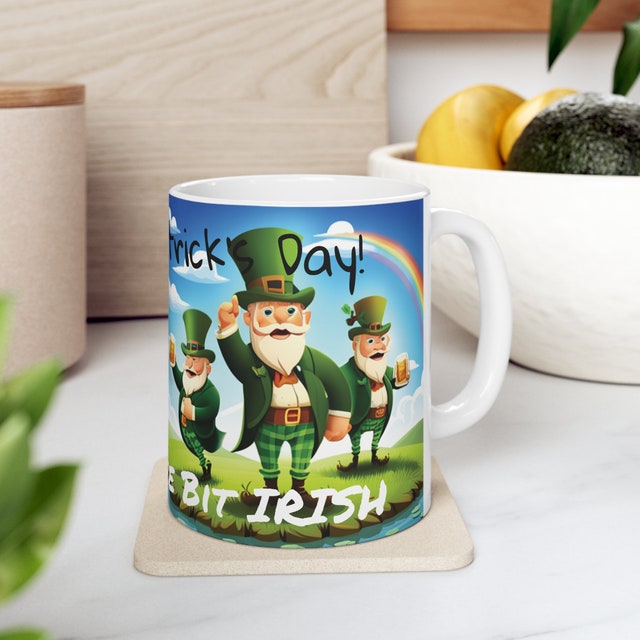
      Happy St Patrick's Day, Proudly a Wee Bit Irish! - Ceramic Mug 11oz
      Happy St Patrick's Day, Proudly a Wee Bit Irish! - Ceramic Mug 11oz

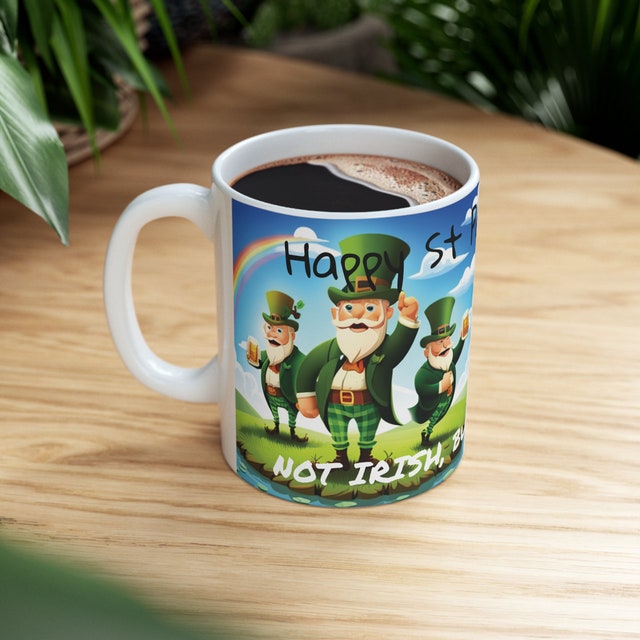
      Happy St Patrick's Day, NOT IRISH, but ready to party! - Ceramic Mug 11oz
      Happy St Patrick's Day, NOT IRISH, but ready to party! - Ceramic Mug 11oz


      Conclusion


      In conclusion, St. Patrick's Day stands as a testament to the enduring power of cultural celebration, uniting people across borders and generations. The festivities in Ireland and the United States, while rooted in a shared heritage, have evolved into unique expressions of cultural pride and communal joy.

      Whether it's a small village parade in Ireland or a colossal procession through the streets of New York, St. Patrick's Day brings people together in a shared celebration of Irish culture. As we raise our glasses in a toast to St. Patrick, let us revel in the diversity of these celebrations, recognizing that the spirit of this joyous day transcends borders and welcomes all who wish to join in the merriment. Sláinte!

      Popular Posts